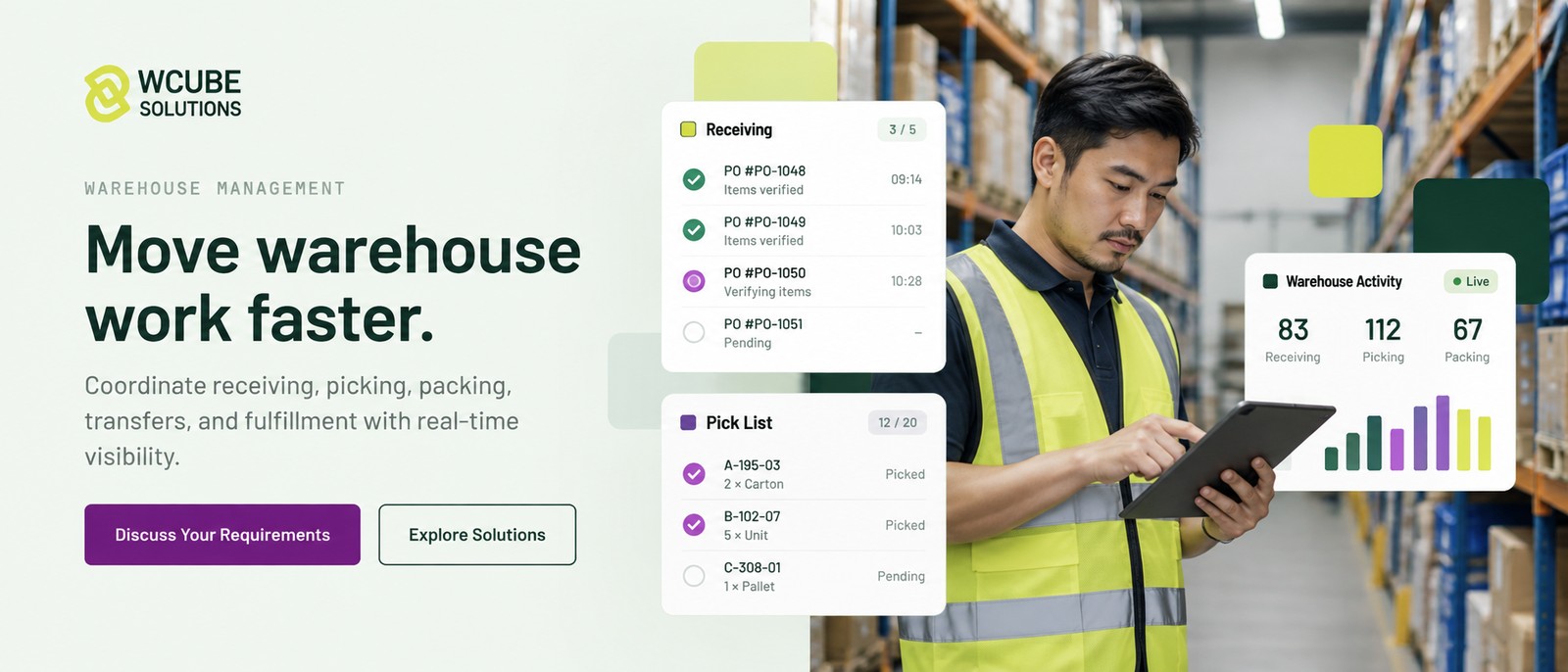
Warehouse Management System.
Know exactly where every unit is: a warehouse management system for the Philippines, scan-verified from receiving to delivery and synced to your ERP.
- Barcode & QR
- FEFO
- Serial tracking
- Cycle counting
- Multi-site
End-to-End Inventory Control.
Control every stock move, from goods in to signed delivery, across every site.
Inbound Goods Receipt.
- Goods receipt against PODeliveries checked line by line on arrival, so shortages surface at receiving.
- Barcode label printingLabels printed at receiving, so every carton and pallet is identifiable.
- Guided put-awayThe system assigns each storage location by rule, not judgement.
Bin-Level Location Control.
- Bin & bay location trackingExact rack, bay and level recorded for every unit.
- Batch, lot & expiry (FEFO)First-expiry-first-out enforced at picking, preventing expiry write-offs.
- Serial number trackingEach unit traceable from receipt to the end customer.
Zero-Downtime Cycle Counting.
- Cycle counting without shutdownZones counted during live operations, with no days lost to stocktakes.
- Real-time stock levelsSystem stock matches physical stock, updated with every movement.
- Variance reviewVariances routed for approval, backed by full count history.
Scan-Verified Order Picking.
- Scan-verified pickingEvery pick confirmed by scan, blocking mis-picks at source.
- Optimised pick pathsPicks sequenced by location to minimise travel per order.
- Batch & wave pickingOrders combined into one pick run when volume justifies it.
Dispatch & Proof of Delivery.
- Packing & dispatch confirmationOne confirmation updates the ERP, customer portal and invoice queue.
- Proof of deliverySignature and photo captured on the driver’s phone; invoicing follows confirmed delivery.
- Customer-facing delivery statusDelivery status published to customers, cutting inbound enquiries.
Multi-Warehouse Consolidation.
- Stock by site, in one viewStock at every location in one view, with nothing to reconcile.
- Inter-branch transfersTransfers raised, dispatched and received in-system, with stock visible in transit.
- Consolidated reportingReported across all sites, or filtered to one.
Warehouse Hardware Integration.
Your existing scanners and printers stay in use, with additional devices supplied by WCube as needed.
-
Barcode scanners Handheld and wearable
-
Label printers Desktop and industrial
-
Mobile terminals Rugged handheld and vehicle-mounted
-
RF & Wi-Fi Full warehouse coverage
-
Weighing scales Weights captured automatically
-
RFID Portal and handheld readers
-
CCTV & access control Linked to stock movement
-
Your existing devices Assessed and reused
What Manual Warehousing Is Costing You.
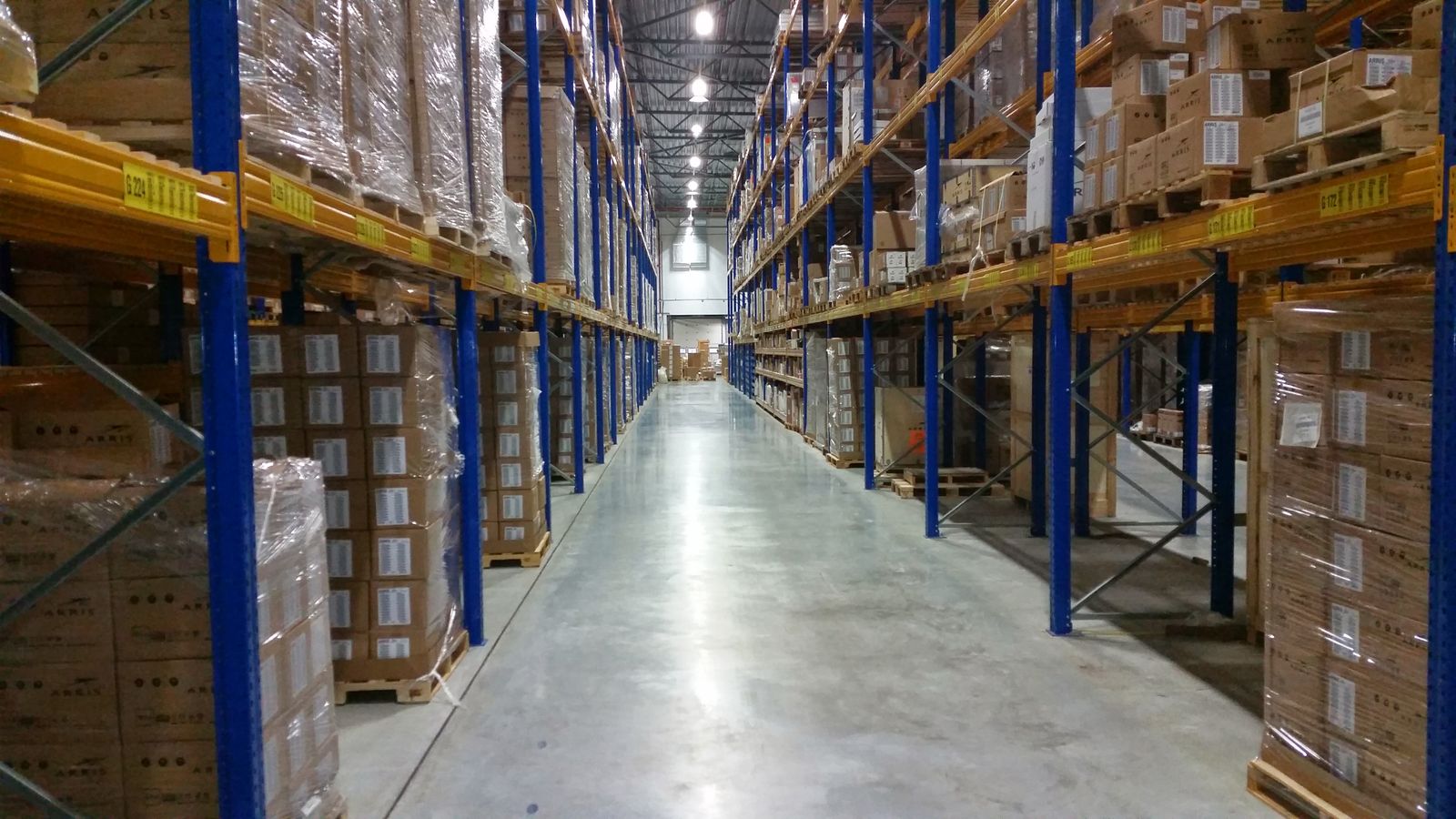
Paper and spreadsheets consume labour hours, shut down zones and tie up working capital.
- Real-Time Inventory Accuracy Scanned counts post directly to inventory. Eliminates recounts and manual tally sheets.
- Zero-Downtime Stocktake Cycle counts run during live operations. No zone closures or weekend shutdowns.
- Same-Day Invoicing Invoices generate from confirmed deliveries. Faster billing, stronger cash flow.
- End-to-End Stock Visibility Every item tracked to its exact location. Disputes resolved directly from the record.
- Faster Staff Onboarding Guided scan-and-confirm on every task. New hires perform to standard from day one.
- Client Self-Service Clients track stock and orders online. Fewer status calls, more productive teams.
- Built-In Compliance Receiving, put-away and dispatch follow one standard. Process gaps and compliance risks eliminated.
- Warehouse Performance Insights Every movement monitored in real time. Slowdowns identified and resolved fast.
Frequently Asked Questions.
What is a warehouse management system?
A warehouse management system (WMS) is software that tracks stock by exact location and controls receiving, put-away, picking, counting and dispatch. It records every movement, not only the quantity on hand.
What is the difference between a WMS and an ERP?
An ERP is the system of record for stock value, orders and finance, while a WMS controls physical handling inside the warehouse. Most operations run both, with the WMS posting confirmed movements back to the ERP.
Do we need a WMS if we already have an ERP?
Yes, if your ERP shows how much stock exists but not where it is. A WMS runs alongside the ERP without replacing it.
How long does a WMS implementation take?
WMS implementation time depends mainly on how many systems it must connect to and how clearly current processes are mapped. You get a realistic schedule before work starts.
Can a warehouse management system integrate with SAP or our accounting software?
Yes, a warehouse management system integrates with SAP and leading accounting platforms through their standard interfaces. No changes to the ERP itself are required.
What is FEFO, and when does it matter?
FEFO (first-expiry-first-out) means stock is picked in order of expiry date, not arrival date. It matters for food, pharmaceuticals, chemicals and cosmetics, where it prevents expiry write-offs.